SAVE ABOUT 10% FROM BUYING USED CARS ONLINE

At FF, we are really into our online shopping. What happens then when you want to buy something big like an apartment or a used car? Researching and purchasing such stuff online helps with not haggling with tough sellers and avoiding scams. We seriously think that online prices are non-biase because they are put next to their competitors. Best used car advice on the net are everywhere. You just have to be savvy to go to one with enough entries and hits. Pick a reputable Singapore used cars site such as ST701Cars. They have a thorough search engine for people who want to buy and sell cars in Singapore, featuring new and used cars. Buying used cars can have a significant saving. You're probably going to save at least 10% in most cases from a private seller and you are going to be able to strong arm a private seller, most of whom are selling out of necessity and want to get the car of the the driveway.


Go to ST701Cars for more information.

ANTI THEFT SANDWICH BAG


Anti-theft sandwich bags with mould printed on it. Ha! Love it.

SOME PEOPLE SAY LEFTOVER CUT ONIONS ARE NOT HARMFUL, WHICH IS IT?


Chemist Kitchen says this:
Reason 1: Nothing is a bacteria magnet. Firstly, bacteria have minimal mobility. They usually travel in water droplets, if at all. Sneezes, for example. Moulds can release spores which get blown around but bacteria usually grows in moist environments and are slimy, making getting airborne difficult. Secondly, if there was such a thing as a 'bacteria magnet' it would be enormously useful in the medical field for drawing bacteria away from the ill and infirmed. Not such use has been made of onions. 


Contact with unclean hands can introduce bacteria to new surfaces but they need a surface that will support growth, otherwise they will just stay there without multiplying or die.


Reason 2: Bacteria like moist, neutral environments. Not many acidic things grow bacteria. That's why vinegar is used for preserving. The surface of a cut onion is acidic due to the production of sulphuric acid (this is what makes your eyes water). There are some moulds that will tolerate acidic conditions and grow on onions but they are not high risk, they are visible, and any normal person would cut them off or ditch the onion.


Reason 3: High risk foods are usually high in protein and available moisture. Onions are low protein, verging on nil, and what moisture they have is contained in their cellular structure. The surface, as well as being acidic, dries soon after cutting and will not support bacterial growth.


Reason 4: If onions are attracting bacteria, where are they coming from? Somewhere else in your fridge? Perhaps it is time to clean the fridge.


Reason 5: In the 20 odd years I worked in a food laboratory, onions were never mentioned as even a suspect in a food poisoning case.

DON'T USE LEFTOVER ONIONS

We have used an onion which has been left in the fridge, and sometimes we don’t use a whole one at one time, so save the other half for later. We should really buy smaller onions in the future.Onions are a huge magnet for bacteria, especially uncooked onions. You should never plan to keep a portion of a sliced onion. It’s not even safe if you put it in a zip-lock bag and put it in your refrigerator. It’s already contaminated enough just by being cut open and out for a bit, that it can be a danger to you (and doubly watch out for those onions you put in your hotdogs at the baseball park!)If you take the leftover onion and cook it like crazy you’ll probably be okay, but if you slice that leftover onion and put on your sandwich, you’re asking for trouble. Both the onions and the moist potato in a potato salad, will attract and grow bacteria faster than any commercial mayonnaise will even begin to break down.Also, dogs should never eat onions. Their stomachs cannot metabolize onions.

DON'T USE EXTRA OLIVE OIL FOR COOKING


This is a bad habit for some of us because it boils down to convenience. Extra virgin can actually be worse to cook with as opposed to the "lower grades" of olive oil. Extra virgin has a lower smoke point and cooking with it can result in greasier tasting dishes. Use regular olive oil if you intend to fry things with it. Only use extra virgin olive oil for drizzling and dipping breads.

MAKE YOUR OWN YARN

We are into crocheting and yarn is sometimes expensive to buy. Here are some alternative to wool which we can possibly make ourselves. The  tee shirt yarn, paper yarn and plastic bag yarn.

FIDGETY FINGERS' APPLE PROJECT


We have been keeping bits of yarn, sometimes too short to even make anything out of it. After we came across the apple cozy pattern, we thought it would be time to make use of these loose bits because the crochet pattern does not require that much yarn anyway.


Anyway, we have been making so many apple cozies, we are calling it our Apple Project. We are giving apples away with the cozies to friends. An apple a day keeps the doctor away, An apple cozy with leftovers keeps our planet smiling a bit more.

CROCHET IS THE NEW MEDITATION : MAKE YOURSELF A PRESENT AT THE END


Yes, crocheting is our new addiction. We cannot get enough of it. The thing we love about it is that it is so calming and ok, somewhat monotonous. You can do that whilst watching telly, listening to music, whilst on the bus and at the end of it, you have a present for yourself, yea!
You can solve personal problems and come up with new ideas for just about any situation. If you’re anxious, upset, or just want to pass some time, you can always count on crocheting to help unwind while tapping into your creativity. The best part of this is you’re also making a useful item in the process.

CHOOSE A SIMPLE PATTERN

To really get the full benefits of reducing stress through crocheting choose a project you don’t have to think too deeply about. Stay away from complicated patterns, instead choosing something simple such as an afghan or a beach bag. These have repeating stitches and don’t require that you pay too much attention to what you’re doing. After awhile you’ll get into a smooth rhythm with your stitches and feel your mind start to wander. Let it! The worst that could happen is you’ll goof up a stitch or two that you can easily take out. Most likely though nobody will even notice.

RECYCLE YOUR ONION SKINS : USE IT AS A DYE

This is from a crafty knitter who used natural ingredients to dye her yarn. So cool.

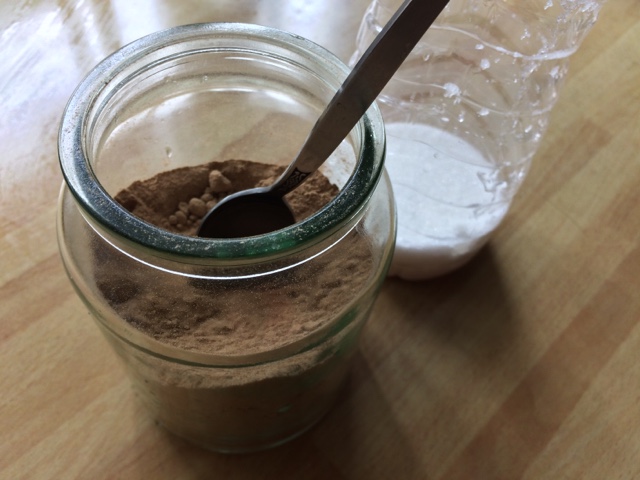
Onion Skins Ready for Dyeing


The other day I finished up yet another batch of hand-dyed yarn. This time I used onion skins. I had been collecting them forever in order to get enough to dye some yarn with! Two ounces of onion skins is an insane amount as you can tell from the picture. I only used yellow onion skins, no red onions. Thankfully my husband and I cook a lot so there is always an abundance of onions in our house. Although, that still was a lot of onions! I would highly recommend recruiting friends and family in the onion skin saving endeavor if you decide to try this one yourself. Or you could ask the produce manager of your local grocer if you can have their discards. I never got around to doing that.
For the 2 ounces of onion skins I ended up using 3 ½ ounces (the whole skein) of Patons Classic wool yarn. Because I was feeling lazy and just wanted to jump right into dyeing I didn’t bother with mordanting the yarn. If I had I would have used alum which is my mordant of choice. I soaked the yarn overnight in cool water to thoroughly saturate it.
To prepare the onion skins I placed them in my dye pot and filled it with tap water. I then slowly brought the water to a simmer and held it there for one hour. After that I contemplated straining the dye bath but then decided to let the onion skins sit in it over night and cool.
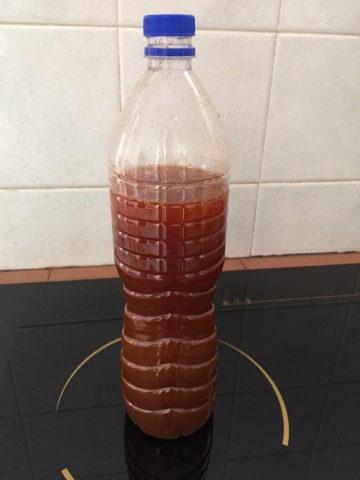
For day two I was going to strain out the onion skins before adding the yarn to the now cooled dye bath but at the last minute decided to leave them in and see what would happen. I did take a picture of the cooled dye bath and it shows what a deep golden color I ended up with.
Onion Skin Dye


To the cooled dye I added my soaked yarn and slowly brought the bath up to a simmer. I keep it at a simmer for one hour. Once it was done simmering I let the yarn cool completely in the bath before I removed it and washed it out.
After I removed the yarn I noted that there was still a significant amount of color left in the dye bath so I decided for the heck of it to see if I could get a little bit more out of it. So, I prepared 1 ½ ounces of wool yarn by soaking it for several hours. I used less yarn this time only because I was unsure of the outcome and didn’t want to waste too much yarn if I didn’t like the results.  No mordant again. I then added this yarn to the pot and simmered for once again another hour.
So to conclude, the first batch of yarn came out a very deep rusty gold color, sort of like a burnt orange and the second batch was very noticeably lighter. It is more of a light red orange. I was actually very surprised by these two batches. I was not expecting such orange colors. But that is the fun part of using natural dyes! You never really know what is going to come out of the dye pot until you are done!
Top: first batch to come out of bath Bottom: second batch to come out of bath

ROAST CHICKEN SOUP : WHY THROW AWAY YOUR ROAST CHICKEN CARCASS

One of our favourite soups, especially since it uses up the carcass of a roast chicken, which so many people just throw away. Also because it's so easy to make. We used to buy chicken carcass from the market, but after coming across the idea of reusing the carcass from a roast chicken... hey! we get a free pot of soup with every roast chicken we make over the weekend. SWEET!


INGREDIENTS
  • One roast chicken carcass – as much meat stripped off as possible and most of the juice dark meat from the bottom. Save all the meat for sandwiches, curry etc.
  • The juices from he roasting tin, and any leftover gravy
  • 2 medium onions, chopped finely
  • 1 garlic clove, finely chopped
  • 2 large carrots, diced
  • 1/2 a large celeriac, swede, turnip or other similar root vegetable, diced
  • 2 stalk of celery, finely chopped
  • Salt and pepper to taste
  • Water
  • 2 tablespoons of olive oil (not extra virgin, we will explain why later)
  • 2 teaspoon of fresh thyme
  • 1 bay leaf

DIRECTIONS
  • Chop all the vegetables, and breakup the carcass into half or quarter it depending on your pot.
  • Sweat the onions in olive oil in a saucepan till they are translucent.
  • Turn up the heat and add the garlic and vegetables to soften and coat with oil.
  • Add the parsley, thyme and bay leaf, then add the chiccken carcass together with the roasting tin juices and gravy. Add salt and pepper.
  • Pour in enough water to cover the carcass and bring it to a gentle boil. We usually boil it for 2-3 hours.
TADA! Use this stock however you might. You can even freeze it for use next time.

CHOOSING CROCHET PATTERNS FOR MEN (i.e. MR WASHY)

Mr Washy is coming to visit and because Europe is getting ridiculously cold and also because Washy doesn't have proper scarves, we have found a couple of patterns to crochet some for him. We found a cable stitch scarf as pictured in green and knitted one for him in brick colour. We are not experts in crochet or knitting but all the instruction videos on youtube made it so easy! These videos are like the grandma or mother we never had. :-S


CABLE STITCH SCARF


Ch 20.
Foundation Row Hdc in 3rd ch from hook and each ch across - 18 hdc.


Row 1 (wrong side) and all odd rows Ch 2, turn, hdc in each st across.


Row 2 (right side) Ch 2, turn, hdc in first 2 hdc, FPdc around next hdc 2 rows below; hdc in next 4 hdc, sk 2 hdc, FPtr around next 2 hdc 2 rows below; working in front of previous 2 FPtr, FPtr around 2 skipped hdc 2 rows below, hdc in next 4 hdc; FPdc around next hdc 2 rows below, hdc in last 2 hdc.


Row 4 Ch 2, turn, hdc in first 2 hdc, FPdc around FPdc 2 rows below; hdc in next 3 hdc, FPtr around next 2 FPtr 2 rows below (slanted FPtr), hdc in next 2 hdc, FPtr around next 2 FPtr 2 rows below (slanted FPtr), hdc in next 3 hdc; FPdc around next FPdc 2 rows below, hdc in last 2 hdc.


Row 6 Ch 2, turn, hdc in first 2 hdc, FPdc around next FPdc 2 rows below; hdc in next 2 hdc, FPtr around next 2 FPtr 2 rows below, hdc in next 4 hdc, FPtr around next 2 FPtr 2 rows below, hdc in next 2 hdc; FPdc around next FPdc 2 rows below, hdc in last 2 hdc.


Row 8 Repeat Row 4.


Row 10 Ch 2, turn, hdc in first 2 hdc, FPdc around next FPdc 2 rows below; hdc in next 4 hdc, sk 2 FPtr 2 rows below, FPtr around next 2 FPtr 2 rows below; working in front of previous 2 FPtr, FPtr around 2 sked FPtr 2 rows below, hdc in next 4 hdc; FPdc around next FPdc 2 rows below, hdc in last 2 hdc.


Rows 11-146 Repeat Rows 3-10 seventeen times.


Row 147 Ch 2, turn, hdc in each st across.
Fasten off.


This is the other scarf is a camel-ish colour. We like this stitch. It makes the scarf looks very solid, it also makes the scarf thicker and thus warmer. Instead of starting with 19 ch as in the pattern below (which is for kids), we started with 29 ch instead.


BASKET WEAVE STITCH


Ch 19. Row 1 (Wrong Side): Dc in 4th ch from hook and in each ch across; turn – 17 sts. 


Rows 2 and 3: Ch 2, skip first st; yo, insert hook from front to back to front around the post of the next st, yo and draw lp through, [yo and draw through 2 lps] twice – fpdc made; work 2 more fpdc; yo, insert hook from back to front to back around the post of the next st, yo and draw lp through, [yo and draw through 2 lps] twice – bpdc made; work 2 more bpdc, 3 fpdc, 3 bpdc, 3 fpdc, hdc in top of beg ch; turn. 


Rows 4 and 5: Ch 2, skip first st, 3 bpdc, [3 fpdc, 3 bpdc] twice, hdc in top of beg ch; turn. 


Rep Rows 2-5 until 50" from beg. Fasten off.

A WISHY WASHY COMPANION


This little guy was accompanying us last night when we were crocheting Mr Washy's scarf. He landed on our jewellery and sat there for ages. Look at the colours!

OUR SUZENE OF FIDGETY FINGERS : LOLITA BOOK COVER


John Gall, vice president and art director at Vintage/Anchor Books and designer of the latest cover of Lolita (see samples of his work here), kindly agreed to review the submissions and picked his own top choices. His favorite is by Suzene Ang of Singapore:
 ”It takes a second before you see what is going on. It’s abstract enough to keep it metaphorical, yet literal enough to imply a sense of story. I love the tease of having the type run up the leg. Elegant, with a sense of humor.”

Gall made a point a few times of stressing the difficulty of the task:
“This is a tough assignment. So many clichéd images to either avoid or make new. Not an easy task.  I teach a cover design class and wouldn’t give this as an assignment in a million years!”


TUESDAY OCTOBER 13TH, 2009


A Makeover for Lolita

suzene-ang1-187x300
A while back, I linked to a contest to redesign the cover of Nabokov’s Lolita. We now have a winner. It is not the cover at left. That one is by Suzene Ang of Singapore, and it was chosen as best not by John Bertram, who sponsored the contest, but by John Gall, a brilliant designer and art director at Vintage/Anchor. He said: “It takes a second before you see what is going on. It’s abstract enough to keep it metaphorical, yet literal enough to imply a sense of story. I love the tease of having the type run up the leg. Elegant, with a sense of humor.”
I like his choice more than the grand prize winner, but I can see why it didn’t appeal most to Bertram. One of Bertram’s big complaints about previously published covers was that they focused on Lolita’s sexuality and “serve[d] to re-traumatize the poor girl all over again.” The winner he chose, Lyuba Haleva of Bulgaria, pleased him by focusing on Humbert: “Somehow it all feels right to me and very inspired, and although the typeface is anachronistic and suggests to me a classic European novel, it seems to work.”

AND SHE LOVES THE RIBBON SCARF...


YUKEN TERUYA : TOILET ROLL FOREST


Yuken Teruya’s beautiful cut toilet paper rolls – who knew that these cardboard things could be so delicate and graceful.

REPURPOSE THE REMNANTS OF YOUR STOLEN BIKE


HALLOWEEN GOOGLY EYES FRAME


This is too cute. We should do it on Mr Washy's photo to scare kids away on Halloween. Ha!

DIY : ASPIRIN MASK


Aspirin is made from acetylsalicylic acid that relieves pain, fever and in some cases, arthiritis.  It is also beneficial to the skin because of its exfoliating abilities.  Similar to salicylic acid, it improves the shape of the pores and remove dead skin cells that can potentially clog your pores.


If you have acne-prone skin, this could relieve redness and inflammation of the acne.  This could also be an effective scrub for all skin types even sensitive skin.  If you are allergic to aspirin, do not try this mask.


INGREDIENTS:
  • Aspirin (uncoated)=3-4 tablets
  • Honey=1tbp
  • Distilled Water=1tsp
  1. Place 3-4 tablets in a small dish and pour 1 tsp of water on it. Make sure all the tablets are moistened from the water. Wait for 2 minutes.
  2. Use your fingers and crush them until they are fully crumbled.
  3. Pour the 1 tbsp of honey onto the crushed aspirin and stir them together.
  4. Use your fingers and spread it all over your cleansed face avoiding the eye area. Wait for 15 minutes.
  5. Use your fingers and gently massage your face in circular motion. Rinse off.
  6. Apply toner with a cotton swab to remove any residue and slap on some moisturizer.
The honey makes the aspirin adhere better to the skin and it also has natural healing properties

BEST OF REALSIMPLE TIPS : POP CORN REPLACES STYROFOAM PEANUTS

We have all heard of how harmful those styrofoam peanuts are for our environment. Grab some corn kernels to pop (without salt and butter of course) and use to cushion your items for packing. This is much cheaper than those peanuts and 100% friendly for your compost bin.


BEST OF REALSIMPLE TIPS : WINE CARTON SHOE RACK